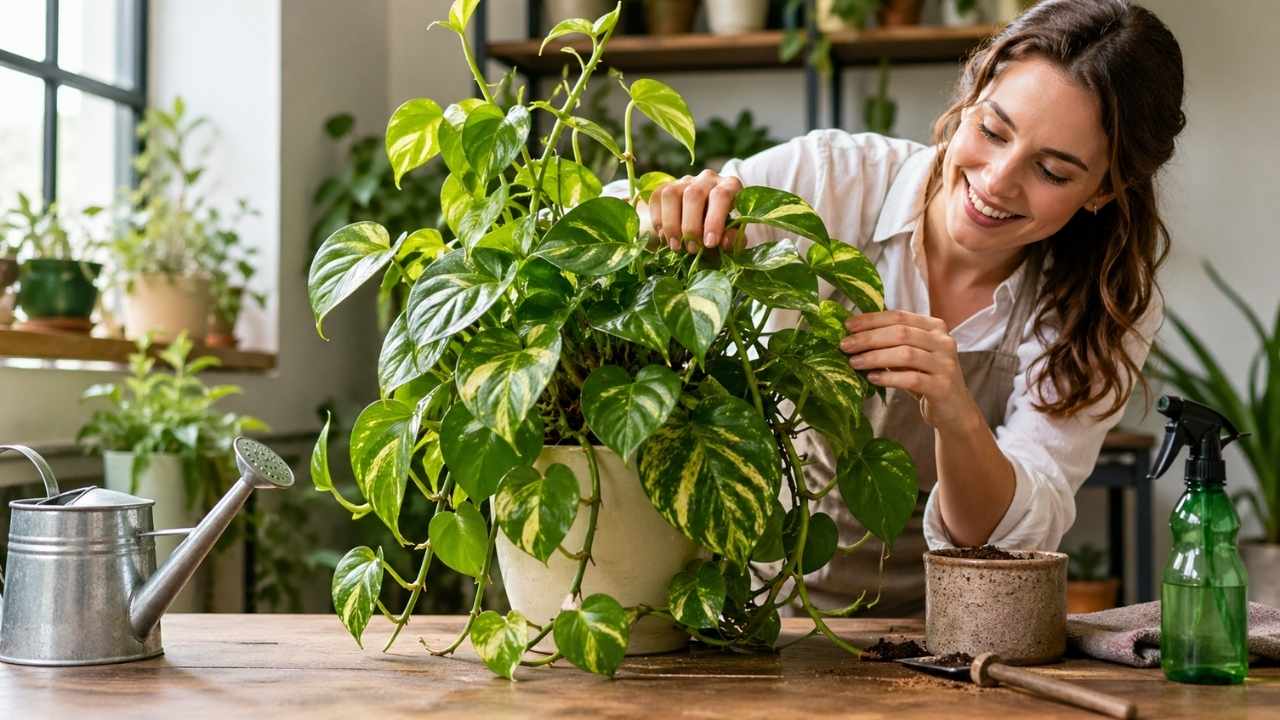
Epipremnum Plant Care: Epipremnum, commonly known as pothos or devil’s ivy, is one of the most popular and easy-to-care-for indoor plants. With its trailing vines and attractive heart-shaped leaves, it adds a fresh and lively touch to any space. Native to tropical regions, this plant adapts well to indoor environments, making it an excellent choice for both beginners and experienced plant enthusiasts.
One of the reasons Epipremnum is so widely loved is its resilience. It can tolerate occasional neglect and still maintain its charm. However, with proper care, it grows faster, looks healthier, and develops more vibrant foliage.

Choosing the Right Spot Indoors
Light is an important factor in keeping your Epipremnum healthy. This plant thrives in bright, indirect sunlight. Placing it near a window with filtered light encourages strong growth and enhances the color of its leaves.
While it can survive in low-light conditions, prolonged lack of light may slow its growth and reduce leaf variegation. On the other hand, direct sunlight should be avoided, as it can burn the leaves and cause discoloration.

A well-lit room with indirect sunlight is the ideal environment for this plant.
Watering the Right Way
Proper watering is key to maintaining a healthy Epipremnum. It prefers the soil to dry slightly between watering sessions. Before watering, check the top layer of soil. If it feels dry to the touch, it is time to water.

When watering, ensure that excess water drains out of the pot. This prevents water from accumulating at the bottom and reduces the risk of root rot. Using pots with drainage holes is highly recommended.
During warmer months, the plant may require more frequent watering, while in cooler months, watering should be reduced.

Ideal Soil and Potting Needs
Epipremnum grows best in well-draining soil. A standard indoor potting mix works well, but adding perlite or sand can improve drainage and prevent waterlogging.
Repotting is generally needed every one to two years. If you notice roots growing out of the drainage holes or the plant becoming root-bound, it is time to transfer it to a slightly larger pot.

Avoid using oversized pots, as they can retain excess moisture and harm the roots.
Temperature and Humidity Preferences
This plant thrives in typical indoor temperatures, ideally between 18°C and 30°C. It should be kept away from cold drafts and sudden temperature changes, which can stress the plant.

Although Epipremnum can tolerate average indoor humidity, it benefits from slightly higher humidity levels. Occasional misting or placing a water tray nearby can help maintain a comfortable environment.
Feeding and Fertilizing
Epipremnum does not require heavy feeding, but occasional fertilization supports healthy growth. Use a balanced liquid fertilizer once a month during the growing season, which includes spring and summer.

Over-fertilizing should be avoided, as it can lead to salt buildup in the soil and damage the roots. During autumn and winter, fertilizing can be reduced or stopped.
Pruning and Training the Vines
Regular pruning helps maintain the shape and fullness of the plant. If the vines become too long or sparse, trimming them encourages new growth and makes the plant bushier.

You can also guide the vines to climb using supports like trellises or moss poles. Climbing often leads to larger and more attractive leaves.
Pruned cuttings can be reused for propagation, making it easy to grow more plants.
Easy Propagation Methods
Epipremnum is one of the easiest plants to propagate. Take a cutting that includes at least one node and place it in water or soil.
If you choose water propagation, keep the node submerged and place the container in a bright location. Roots will begin to develop within a few weeks. Once they are strong enough, the cutting can be transferred to soil.
This method allows you to expand your collection or share plants with others.
Common Problems and Solutions
Despite being low-maintenance, Epipremnum may occasionally face issues. Yellow leaves often indicate overwatering, while brown edges may be a sign of underwatering or low humidity.
Pests such as spider mites or mealybugs can sometimes appear. Regularly inspecting the leaves and cleaning them with a damp cloth can help prevent infestations.
Addressing problems early ensures the plant remains healthy and vibrant.
Benefits of Growing Epipremnum Indoors
In addition to its beauty, Epipremnum offers several indoor benefits. It helps improve air quality and creates a calming atmosphere in living spaces.
Its low-maintenance nature makes it ideal for people with busy schedules. The plant adapts easily and continues to thrive with minimal effort.
Final Thoughts
Epipremnum is a reliable and rewarding indoor plant that suits almost any environment. With proper light, careful watering, and occasional maintenance, it can grow beautifully and enhance your indoor space.
Whether you are new to gardening or already have experience, this plant is a wonderful addition to your home.