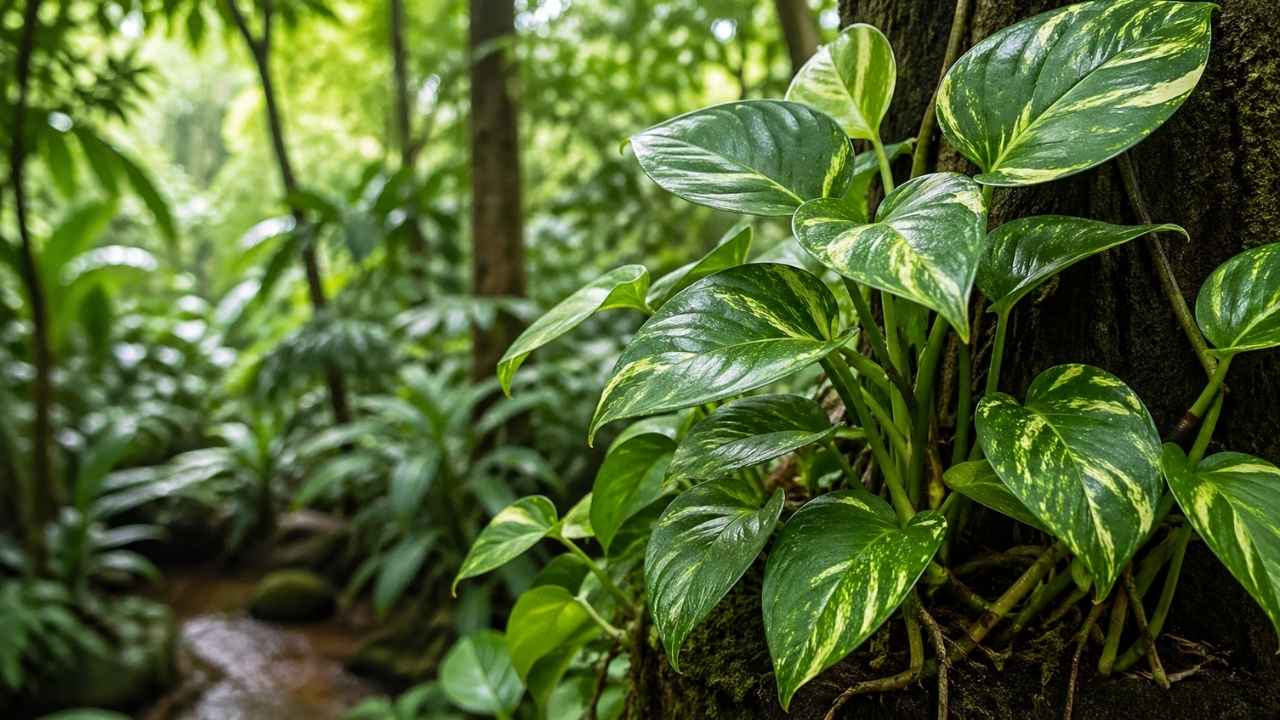
Pothoideae Subfamily: The Pothoideae subfamily is a fascinating group of plants within the Araceae family, notable for its diverse forms and ecological adaptations. Members of this subfamily are primarily tropical in origin, thriving in the warm, humid environments of South and Central America, Asia, and parts of Africa. They exhibit a wide range of growth habits, including climbing vines, epiphytes, and terrestrial species.
Pothoideae has garnered significant attention from botanists and horticulturists alike due to its ornamental value, ecological significance, and adaptability. Understanding its classification, key genera, distinguishing traits, and ecological roles provides insight into why these plants are both scientifically important and popular in cultivation.

Classification of the Pothoideae Subfamily
Pothoideae belongs to the Araceae family, commonly known as the arum family. Within the larger family, this subfamily is distinguished by a combination of morphological and reproductive traits that set it apart from other araceous groups.
The subfamily is traditionally divided into several genera based on features such as leaf structure, inflorescence type, and growth habit. Modern phylogenetic studies have refined these classifications, often grouping plants with similar genetic markers together even when morphological differences exist. This approach has led to a more precise understanding of evolutionary relationships within the subfamily.

Key Genera in Pothoideae
Several genera are considered central to the Pothoideae subfamily, each contributing unique characteristics to the group.
Pothos is perhaps the most well-known genus, widely cultivated for its trailing vines and heart-shaped leaves. It is appreciated for its resilience and ability to thrive under a variety of indoor and outdoor conditions.

Another significant genus is Epipremnum, which includes species like the popular golden pothos. These plants are valued for their climbing habit and attractive variegated foliage, making them favorites for indoor cultivation.
Anthurium and Heteropsis also belong to this subfamily, though their growth habits and leaf forms differ. Anthurium is known for its showy spathes and ornamental leaves, while Heteropsis includes climbing species often found in tropical forest understories.

Other genera, such as Scindapsus and Rhaphidophora, further demonstrate the diversity within Pothoideae. Scindapsus species are admired for their glossy leaves, while Rhaphidophora contains large climbing species that contribute to tropical forest structure.
Distinguishing Traits of Pothoideae
Members of the Pothoideae subfamily share several morphological and physiological traits. Most have simple, often heart-shaped leaves with a glossy texture. Their leaf venation can be prominent, providing both structural support and aesthetic appeal.

A key characteristic of the subfamily is the inflorescence structure, which typically consists of a spadix surrounded by a spathe. This arrangement is common among araceous plants and is important for reproduction, as it attracts pollinators such as insects.
Many Pothoideae species are climbers or epiphytes, with aerial roots that allow them to attach to other plants or surfaces. These roots not only support climbing but also absorb moisture and nutrients from the surrounding environment.

Physiologically, members of this subfamily are adapted to humid, low-light conditions. They can tolerate intermittent periods of drought and are often capable of vegetative propagation, which aids in survival in competitive forest habitats.
Ecological Role of Pothoideae Plants
Pothoideae species play significant roles in tropical ecosystems. As climbers and epiphytes, they contribute to forest structure, providing habitat and shelter for insects, birds, and small mammals. Their leaves offer surfaces for other organisms, including epiphytic mosses and fungi, promoting biodiversity.
The flowers and fruits of Pothoideae plants also support pollinators and seed dispersers. Insects, particularly beetles and flies, are attracted to their spathes, facilitating pollination. Fruits produced by some genera are consumed by birds and mammals, aiding in seed dispersal and ensuring the continuation of these plant populations.
Additionally, Pothoideae contributes to nutrient cycling within forest ecosystems. Their leaves and stems, when they fall, decompose and enrich the soil with organic matter, supporting the growth of other plants. The subfamily’s presence on tree trunks and branches helps stabilize the microclimate by moderating humidity and light levels in the understory.

Cultivation and Human Use
Beyond their ecological significance, Pothoideae plants have long been valued by humans. Many species are cultivated for ornamental purposes, both indoors and in tropical gardens. Their climbing and trailing growth habits, combined with attractive foliage, make them ideal for decorative arrangements, hanging baskets, and vertical plant displays.
Some genera, such as Pothos and Epipremnum, are particularly popular for their ability to purify indoor air and tolerate a wide range of environmental conditions. These plants are low-maintenance, resilient, and capable of thriving even in low-light indoor spaces, making them suitable for homes and offices.

Propagation is relatively easy for most Pothoideae species. Cuttings can root quickly in water or soil, allowing enthusiasts to expand their collections or share plants with others. This ease of propagation has contributed to their global popularity and widespread distribution.
Conservation and Challenges
While many Pothoideae species are resilient and adaptable, some face threats from habitat destruction and overcollection. Tropical forests, where these plants naturally occur, are under pressure from deforestation, agriculture, and urbanization. This loss of habitat can reduce natural populations and limit genetic diversity.
Conservation efforts, including cultivation in botanical gardens and responsible propagation by hobbyists, are crucial to preserving these plants. Understanding their ecological role and requirements helps inform strategies for both in situ and ex situ conservation.
Conclusion
The Pothoideae subfamily represents a diverse and ecologically important group of tropical plants. Its key genera, such as Pothos, Epipremnum, and Anthurium, showcase a wide variety of forms, growth habits, and adaptations that have allowed these plants to thrive in tropical environments and beyond.
Distinguishing traits, including heart-shaped leaves, climbing abilities, and specialized inflorescences, highlight the uniqueness of this subfamily. Beyond their aesthetic appeal, Pothoideae plants support ecosystems by providing habitat, aiding pollination and seed dispersal, and contributing to nutrient cycling.
Their cultivation by humans further emphasizes their value, offering low-maintenance greenery that enhances indoor spaces while promoting ecological awareness. Conserving Pothoideae in natural habitats and through responsible propagation ensures that future generations can continue to appreciate and study these remarkable plants.
Pothoideae is not only a subject of botanical interest but also a practical and beautiful addition to gardens, homes, and educational collections, bridging the gap between ecological function and human enjoyment.