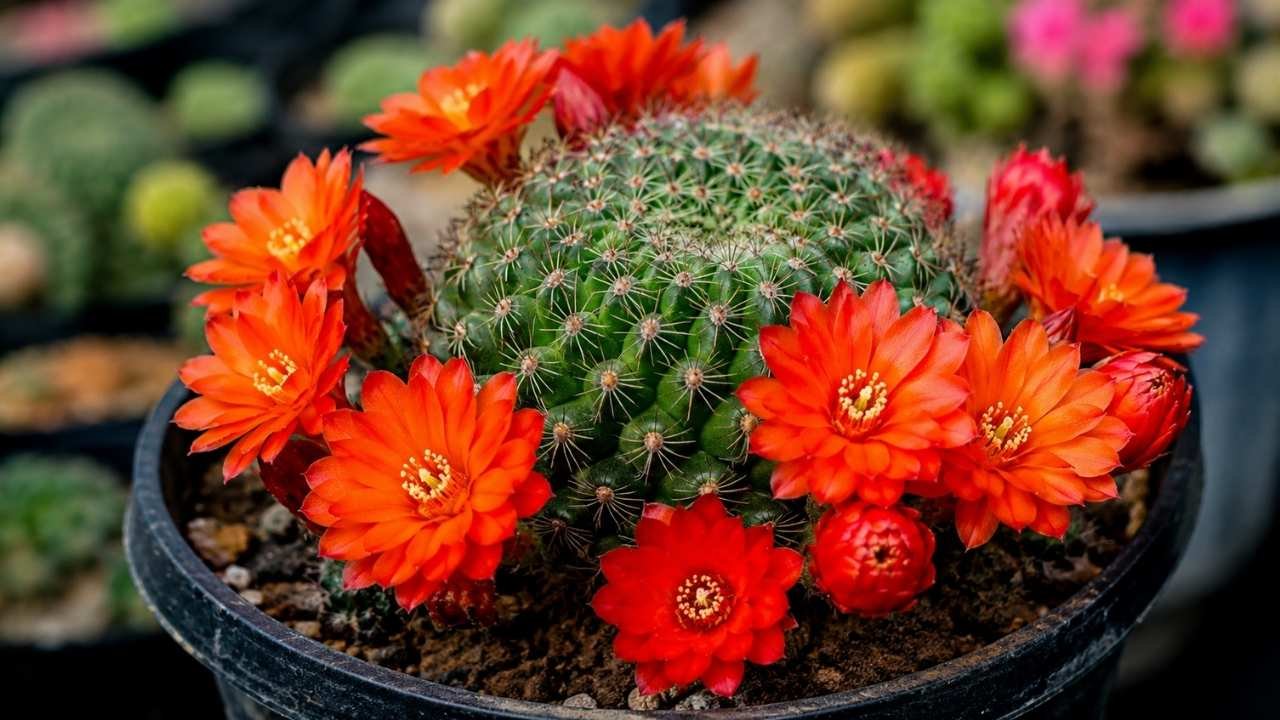
Rebutia Cactus Care Guide: If you are looking for a cactus that combines easy care with stunning flowers, Rebutia cactus deserves a place in your collection. Known for its compact size and spectacular blooms, this charming cactus has become a favorite among indoor plant enthusiasts and succulent collectors worldwide. Unlike many cacti that flower only occasionally, Rebutia plants are generous bloomers, producing vibrant flowers that often cover the entire plant during the growing season.
Native to the mountainous regions of South America, particularly Bolivia and Argentina, Rebutia cacti thrive in conditions that mimic their natural habitat. Their small size makes them ideal for windowsills, balconies, greenhouses, and indoor gardens. Whether you are a beginner or an experienced gardener, learning how to care for a Rebutia cactus can reward you with years of healthy growth and breathtaking floral displays.
This comprehensive guide explores everything you need to know about growing, maintaining, and propagating Rebutia cactus successfully.
Understanding Rebutia Cactus
Rebutia belongs to a genus of small globular cacti admired for their colorful flowers and manageable size. Most varieties remain relatively small, typically reaching only a few inches in height and width. Over time, they form clusters through the production of offsets, creating attractive mounds of green stems.
One of the most remarkable features of Rebutia cacti is their flowers. These blooms emerge from the lower sides of the plant rather than the top, creating a ring of vibrant color around the cactus body. Flower colors range from bright orange and red to yellow, pink, and even white, depending on the species.
Their compact growth habit and eye catching flowers make them excellent choices for indoor gardening and decorative plant displays.
Popular Rebutia Varieties
Several Rebutia species are commonly grown by cactus enthusiasts. Each variety offers unique characteristics while sharing similar care requirements.
Rebutia muscula is among the most popular species. It features soft white spines that create a fuzzy appearance and produces bright orange flowers during spring and summer.
Rebutia heliosa is highly prized for its neat geometric appearance. The plant develops dense clusters of stems covered in short silvery spines and produces brilliant orange blooms.
Rebutia fiebrigii is known for its larger flowers, which often appear in shades of orange and red. This species grows rapidly and forms attractive clumps over time.
Rebutia marsoneri stands out with its vivid yellow flowers that contrast beautifully against its green body and white spines.
Although each variety has distinctive features, their overall cultivation needs remain remarkably similar.
Ideal Growing Conditions
Providing suitable growing conditions is the foundation of successful Rebutia cactus care.
These cacti naturally grow in mountainous environments where sunlight is abundant but temperatures remain relatively moderate. Replicating these conditions helps ensure healthy growth and abundant flowering.
Rebutia cacti prefer bright light throughout the year. A sunny windowsill receiving several hours of indirect or filtered sunlight is usually ideal. Morning sunlight is especially beneficial because it encourages flowering without exposing the plant to excessive afternoon heat.
While they enjoy bright conditions, sudden exposure to intense direct sunlight can cause sunburn. Gradually acclimating the plant to stronger light helps prevent damage.
Good air circulation is equally important. Stagnant air can increase the risk of fungal problems and pest infestations. Keeping the plant in a well ventilated location promotes overall health.
Light Requirements
Light plays a critical role in determining the health and flowering performance of Rebutia cactus.
Insufficient light often results in stretched growth, weak stems, and reduced flowering. The plant may become elongated as it searches for more sunlight.
For indoor cultivation, south facing or east facing windows generally provide the best light conditions. If natural light is limited, grow lights can be used to supplement illumination.
During summer, outdoor placement can benefit the plant. However, it should be introduced gradually to avoid shock and sunburn.
A healthy Rebutia grown under proper lighting conditions develops a compact shape, vibrant color, and numerous flower buds.
Temperature and Humidity
Rebutia cacti appreciate moderate temperatures during the growing season.
Daytime temperatures between 18 and 27 degrees Celsius are generally ideal. These conditions closely resemble the climate of their native habitat.
Unlike desert cacti that prefer extreme heat, Rebutia species often perform better in cooler environments. Excessive heat can stress the plant and reduce flowering.
During winter, cooler temperatures encourage dormancy and future blooming. Keeping the plant at temperatures between 5 and 10 degrees Celsius during this period often leads to a more impressive floral display in spring.
Humidity levels should remain relatively low. Excessive moisture in the air may increase the likelihood of fungal issues. Maintaining good ventilation helps keep humidity under control.
Choosing the Right Soil
Proper soil is essential for preventing root rot and supporting healthy growth.
Rebutia cacti require fast draining soil that allows excess water to escape quickly. Standard garden soil is usually too dense and retains excessive moisture around the roots.
A specialized cactus and succulent mix works well for most growers. Additional materials such as coarse sand, pumice, or perlite can improve drainage even further.
The ideal soil structure should remain airy and loose while providing enough stability for root development.
Well drained soil creates an environment where roots can access oxygen efficiently, reducing the risk of common cactus problems.
Watering Rebutia Cactus
Watering is one of the most important aspects of cactus care.
Although Rebutia cacti are drought tolerant, they still require regular watering during active growth. The key is allowing the soil to dry completely between watering sessions.
During spring and summer, water thoroughly whenever the potting mix becomes dry. Excess water should flow freely from the drainage holes.
Overwatering is the most common mistake made by beginners. Constantly wet soil can quickly lead to root rot, which may kill the plant if not addressed promptly.
As autumn approaches, gradually reduce watering frequency. During winter dormancy, only minimal moisture is needed. In many cases, watering once every few weeks is sufficient.
Observing the plant and checking soil moisture levels helps determine the appropriate watering schedule for your environment.
Fertilizing for Healthy Growth
While Rebutia cacti do not require heavy feeding, occasional fertilization can support vigorous growth and flowering.
A balanced cactus fertilizer diluted to half strength is usually sufficient. Feeding once a month during spring and summer provides the nutrients necessary for healthy development.
Avoid excessive fertilization, as too much nitrogen can encourage weak growth and reduce flowering potential.
Fertilization should stop during autumn and winter when the plant enters its dormant period.
A moderate feeding routine helps maintain strong roots, healthy stems, and abundant blooms.
