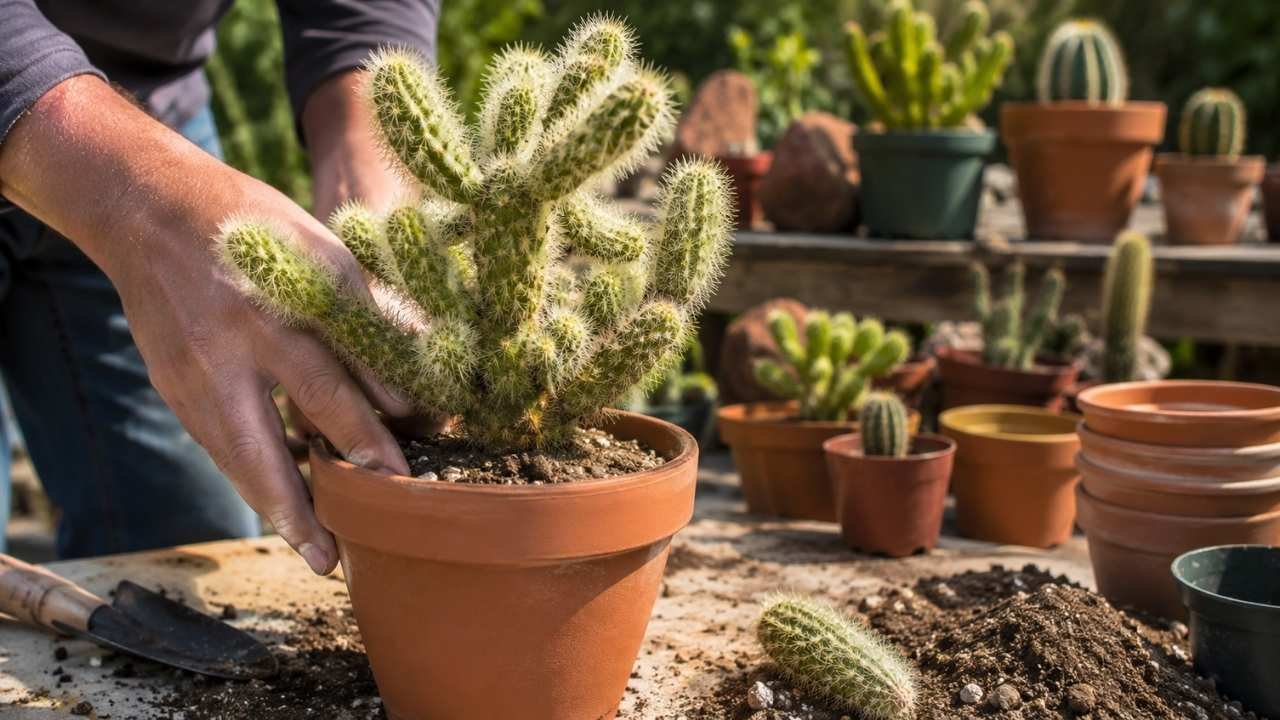
Cholla Cactus Care Guide: The Cholla cactus is one of the most fascinating desert plants you can grow. Known for its unique branching structure, striking silhouette, and incredible ability to thrive in harsh conditions, this cactus has become a favorite among succulent enthusiasts and xeriscape gardeners alike.
Native to arid regions of North and Central America, Cholla cacti belong to the Cylindropuntia genus. These plants are instantly recognizable because of their cylindrical stems covered with sharp spines that often appear to glow in sunlight. Some varieties develop beautiful flowers in shades of pink, purple, yellow, or green, followed by ornamental fruits that can remain on the plant for months.
Although Cholla cacti are considered low maintenance, proper care is still essential for healthy growth and long term survival. Understanding their natural habitat helps gardeners recreate the right conditions at home. Whether you are planting your first Cholla cactus or looking to expand an existing collection, this guide will walk you through everything you need to know.
Understanding the Cholla Cactus
Before planting a Cholla cactus, it helps to understand how these plants grow in nature.
Cholla cacti evolved in deserts where rainfall is scarce, temperatures fluctuate dramatically, and the soil drains quickly. Their stems store water efficiently, allowing them to survive long periods without moisture. The spines serve several purposes, including protection from animals and reducing water loss.
One interesting characteristic of Cholla cacti is their segmented growth pattern. Individual stem segments can detach easily and root wherever they land. This natural adaptation allows the plant to spread across desert landscapes.
Different species vary in size and appearance. Some remain compact and shrub like, while others can grow into impressive tree forms several feet tall. Despite these differences, most Cholla species share similar care requirements.
Choosing the Right Cholla Variety
Selecting the right species is an important first step.
Popular Cholla varieties include the Chain Fruit Cholla, Teddy Bear Cholla, Buckhorn Cholla, Silver Cholla, and Staghorn Cholla. Each offers unique visual appeal and growth habits.
The Teddy Bear Cholla is famous for its dense golden spines that create a soft looking appearance despite being extremely sharp. Chain Fruit Cholla produces decorative fruit chains that hang from the stems and add visual interest throughout the year.
If space is limited, smaller varieties are usually a better choice. Larger species work well in desert themed landscapes and outdoor cactus gardens.
Researching the mature size of your chosen species helps prevent overcrowding and ensures the plant has enough room to develop naturally.
Ideal Growing Conditions
Creating the right environment is essential for success.
Cholla cacti prefer full sun exposure. Ideally, they should receive at least six to eight hours of direct sunlight every day. Insufficient light can lead to weak growth, pale coloration, and reduced flowering.
Temperature is another important factor. Most Cholla species tolerate extreme heat remarkably well. During summer, temperatures above 100 degrees Fahrenheit rarely cause problems as long as the plant remains dry and well ventilated.
Many species can also withstand mild winter conditions. However, prolonged freezing temperatures combined with excess moisture may damage stems and roots.
Good airflow around the plant helps reduce disease risks and encourages healthy development.
Soil Requirements
Proper soil is one of the most critical aspects of Cholla cactus care.
These plants dislike heavy soils that retain water for extended periods. Poor drainage often leads to root rot, which is one of the most common causes of cactus failure.
A sandy, gritty cactus mix works best. The goal is to create a growing medium that allows water to pass through quickly.
You can prepare a homemade cactus mix by combining:
One part coarse sand
One part perlite or pumice
One part cactus potting soil
This mixture promotes healthy root growth while preventing excess moisture accumulation.
When planting outdoors, consider amending clay soils with gravel or coarse sand to improve drainage.
How to Plant a Cholla Cactus
Planting a Cholla cactus requires careful handling because of its sharp spines.
Always wear thick gardening gloves and use tongs when moving or positioning the plant.
Begin by selecting a location with full sun and well draining soil.
Dig a hole slightly wider than the root ball but no deeper than its original container depth. Place the cactus in the hole and gently backfill with prepared soil.
Avoid planting too deeply because buried stems can become susceptible to rot.
After planting, lightly firm the soil around the base to provide stability.
Wait several days before watering. This allows any damaged roots to heal and reduces the risk of infection.
Growing Cholla Cactus in Containers
Container cultivation is an excellent option for gardeners who live outside desert climates.
Choose a pot with drainage holes at the bottom. Terracotta containers are especially beneficial because they allow moisture to evaporate more quickly than plastic pots.
Fill the container with a well draining cactus mix and position the plant so the root crown sits slightly above the soil surface.
Place the pot in the sunniest location available. South facing windows, patios, and balconies often provide ideal conditions.
Container grown Cholla cacti may require slightly more frequent watering than landscape specimens because potting soil dries out faster.
However, overwatering remains a greater threat than underwatering.
Watering Guidelines
One of the biggest mistakes beginners make is watering too often.
Cholla cacti are highly drought tolerant and store water within their stems. Frequent watering can overwhelm the root system and create ideal conditions for fungal diseases.
During the active growing season, water thoroughly only when the soil becomes completely dry.
In many climates, this may mean watering every two to three weeks during summer.
During winter, watering should be reduced significantly. Some mature outdoor specimens may survive the entire season without supplemental irrigation.
Always allow excess water to drain away completely.
If you are uncertain whether the plant needs water, waiting a few extra days is usually safer than watering too soon.
Fertilizing for Healthy Growth
Cholla cacti generally require very little fertilizer.
In nutrient poor desert environments, these plants have adapted to survive with minimal feeding.
Applying a diluted cactus fertilizer once during spring and again in early summer is often sufficient.
Choose a fertilizer formulated specifically for cacti and succulents. Products with lower nitrogen levels tend to support stronger growth without encouraging excessive soft tissue development.
Avoid fertilizing during winter dormancy because the plant is not actively growing.
Excessive feeding can lead to weak stems and reduced drought tolerance.
Seasonal Growth Patterns
Understanding the natural growth cycle helps you provide better care.
Most Cholla cacti become active during spring as temperatures begin to rise. New stem segments develop during this period, and flowering often follows shortly afterward.
Summer brings the most vigorous growth, especially when warmth and sunlight are abundant.
As autumn approaches, growth gradually slows. The plant begins preparing for cooler temperatures and reduced water availability.
Winter is typically a resting period. During this time, minimal intervention is needed beyond protecting the plant from excessive moisture.
Recognizing these seasonal changes allows gardeners to adjust watering and fertilization schedules appropriately.
