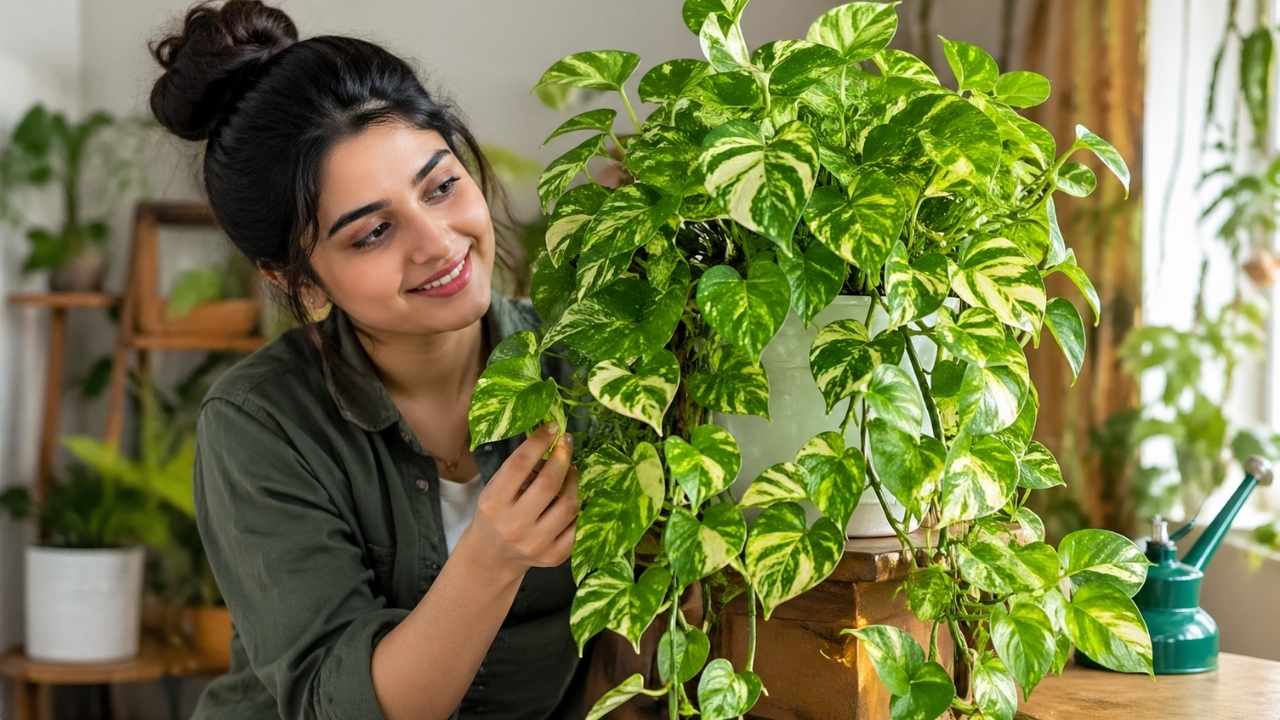
Pothos Plant Care: Pothos plants are one of the easiest and most rewarding houseplants you can grow indoors. Known for their trailing vines and heart shaped leaves, they add a natural, calming touch to any room. Whether placed on a shelf, hung in a basket, or trained to climb, pothos adapts beautifully to different spaces and styles.
Native to tropical regions, pothos plants have a strong ability to survive in a wide range of indoor conditions. This makes them perfect for beginners as well as experienced plant lovers. With minimal care, they grow quickly and stay lush, making them a favorite choice for indoor greenery.
Choosing the Right Pothos Variety
There are several types of pothos plants, each with unique leaf patterns and colors. Golden pothos is one of the most common, with green leaves streaked with yellow. Marble queen pothos has a striking mix of white and green, while neon pothos stands out with its bright lime green foliage.
When choosing a variety, consider the lighting in your space. Variegated types need slightly more light to maintain their patterns, while solid green varieties can tolerate lower light conditions. No matter the type, all pothos share similar care needs, making them easy to manage.

Ideal Light Conditions
Pothos plants thrive in bright, indirect light. Placing them near a window where sunlight is filtered works best. Direct sunlight can damage the leaves, causing them to fade or burn, while too little light may slow growth and reduce variegation.
One of the reasons pothos is so popular is its ability to tolerate low light. While it may not grow as fast in dim conditions, it will still survive and maintain its beauty. Rotating the plant occasionally helps ensure even growth on all sides.

Watering Tips for Healthy Growth
Proper watering is key to keeping your pothos healthy. These plants prefer the soil to dry out slightly between waterings. Overwatering can lead to root rot, which is one of the most common problems.
A good rule is to water once the top inch of soil feels dry. Depending on your environment, this may be once a week or every ten days. Always use a pot with drainage holes so excess water can escape easily. During cooler months, reduce watering as the plant’s growth slows.

Best Soil and Potting Mix
Pothos plants do well in well draining soil. A standard indoor potting mix works fine, but adding perlite or sand can improve drainage. Good soil allows air to reach the roots and prevents water from sitting too long.
Repotting is usually needed every couple of years or when the plant becomes root bound. Choose a pot that is slightly larger than the current one. Fresh soil helps provide nutrients and encourages continued growth.

Temperature and Humidity Needs
Pothos prefers temperatures between 18 to 30 degrees Celsius, which matches most indoor environments. It does not tolerate cold drafts or sudden temperature changes, so keep it away from open windows during winter or near air conditioning vents.
While pothos can adapt to normal indoor humidity, it thrives in slightly humid conditions. If your home is very dry, occasional misting or placing the plant near other plants can help create a more favorable environment.

Fertilizing Your Pothos
Feeding your pothos occasionally will support healthy growth and vibrant leaves. A balanced liquid fertilizer applied once a month during the growing season is enough. There is no need to fertilize during autumn and winter when growth naturally slows.
Overfeeding can cause more harm than good, leading to salt buildup in the soil. Always follow recommended amounts and flush the soil occasionally with clean water to remove excess minerals.

Pruning and Training the Vines
One of the best things about pothos is how easily it can be shaped. Regular pruning encourages fuller growth and prevents the vines from becoming too long and sparse. Simply trim just above a leaf node to promote new shoots.
You can also train pothos to climb using a support like a moss pole or trellis. This can result in larger leaves and a more dramatic appearance. Alternatively, letting the vines trail freely creates a relaxed and decorative look.

Common Problems and How to Fix Them
Pothos plants are generally hardy, but they can still face a few issues. Yellow leaves are often a sign of overwatering, while brown edges may indicate underwatering or low humidity.
If the leaves lose their variegation, it may be due to insufficient light. Moving the plant to a brighter spot can help restore its pattern. Pests like spider mites and mealybugs can occasionally appear, but they can be controlled by wiping the leaves and using mild treatments.

Observing your plant regularly helps catch problems early and keeps it in good condition.
Benefits of Growing Pothos Indoors
Pothos plants are not just attractive but also beneficial. They help improve the indoor atmosphere by adding freshness and a sense of calm. Their presence can make a space feel more inviting and comfortable.

Another advantage is their versatility. They can grow in soil or even in water, making them a flexible option for different setups. Their fast growth also makes them satisfying to care for, as you can see visible progress over time.
Conclusion
Pothos is an ideal plant for anyone looking to bring greenery into their home without complicated care routines. With the right balance of light, water, and occasional feeding, it can grow into a beautiful, trailing vine that enhances any indoor space.
By paying attention to simple care guidelines and observing your plant’s needs, you can enjoy a thriving pothos for years. Whether you place it in a living room, bedroom, or workspace, this plant offers both beauty and ease, making it a perfect addition to your indoor garden.