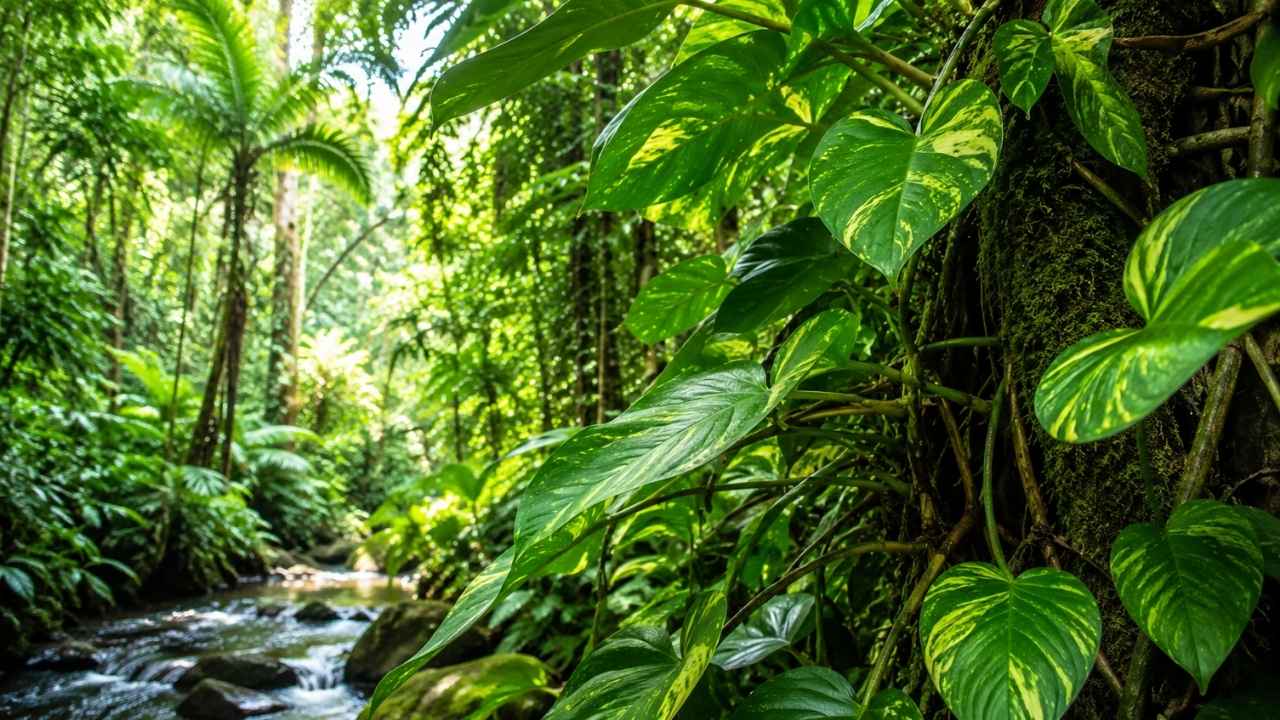
Pothoideae Subfamily: The Pothoideae subfamily is one of the most fascinating groups within the Araceae family, commonly known as the arum family. These plants are admired for their ornamental beauty, unusual leaf structures, and adaptability to tropical environments. Found mainly in humid forests across Asia, Africa, and the Pacific regions, members of Pothoideae have become important both ecologically and horticulturally. Many indoor plant enthusiasts recognize some species for their climbing habits and lush foliage, but the scientific importance of this subfamily goes far beyond decoration.
Pothoideae includes several genera that display unique evolutionary adaptations. Their ability to thrive in shaded rainforests, climb towering trees, and survive in nutrient poor environments has attracted botanists for decades. Understanding their classification and ecology provides valuable insight into tropical biodiversity and plant evolution.

Taxonomic Classification of Pothoideae
Pothoideae belongs to the Araceae family, a large family of flowering plants that contains more than one hundred genera and thousands of species. Within this family, Pothoideae represents a distinct subfamily characterized by specific floral and vegetative traits.
The taxonomic hierarchy of Pothoideae generally follows this structure:
Kingdom Plantae
Clade Angiosperms

Clade Monocots
Order Alismatales
Family Araceae
Subfamily Pothoideae

This subfamily contains notable genera such as Pothos, Pothoidium, and Anadendrum. Taxonomists classify these plants based on reproductive structures, leaf morphology, stem anatomy, and molecular genetic evidence. Modern DNA studies have improved the understanding of relationships among species and have clarified several historical classification disputes.
One defining characteristic of Pothoideae is the presence of a spadix and spathe arrangement, which is typical of the Araceae family. The spadix carries tiny flowers, while the spathe acts as a protective or attractive bract around it. Although the flowers are often small and inconspicuous, their structures are highly significant in plant identification.

Physical Characteristics and Growth Habits
Plants in the Pothoideae subfamily display a remarkable variety of forms. Most species are climbing or creeping plants that rely on surrounding vegetation for support. Their aerial roots help them anchor onto tree trunks and absorb moisture from the atmosphere.
Leaves are usually leathery, glossy, and elongated, although shapes can vary depending on the species and environmental conditions. Juvenile leaves may differ dramatically from mature leaves, a phenomenon known as heteroblasty. This developmental change helps the plant adapt to varying light levels as it climbs higher into the forest canopy.

The stems are flexible yet sturdy enough to support extensive climbing growth. Many species possess nodes that readily produce roots when in contact with moist surfaces. This ability contributes to their efficient spread across tropical habitats.
The reproductive structures are equally specialized. Flowers are tiny and densely packed on the spadix. Pollination often depends on insects attracted by scent, heat production, or visual cues. After pollination, many species produce colorful berries that aid seed dispersal through birds and other animals.

Natural Distribution and Habitat
Pothoideae species are primarily distributed throughout tropical and subtropical regions. Southeast Asia is considered one of the major centers of diversity for this subfamily. Dense rainforests in countries such as Indonesia, Malaysia, Thailand, and the Philippines support numerous native species.
These plants usually inhabit humid lowland forests where rainfall is abundant and temperatures remain consistently warm. They thrive under the forest canopy where filtered sunlight creates a stable microclimate. High humidity levels are essential for healthy growth, especially for species with extensive aerial root systems.

Some species can also be found in swamp forests, riverbanks, and mountainous tropical regions. Their ecological flexibility allows them to occupy different forest layers ranging from the ground floor to high canopy zones.
Epiphytic growth is common in Pothoideae. Instead of rooting directly in soil, many species grow on trees without harming the host plant. This strategy enables them to access better light conditions while avoiding competition on the forest floor.
Ecological Importance
The ecological role of Pothoideae in tropical ecosystems is significant. These plants contribute to forest structure by creating dense networks of climbing vegetation. Their leaves provide shelter and resting sites for insects, amphibians, and small reptiles.
The fruits produced by many species serve as food sources for birds and mammals. Animals that consume the berries help disperse seeds across wide forest areas, supporting plant regeneration and genetic diversity.
Pothoideae species also participate in nutrient cycling. Fallen leaves and decaying plant material enrich the forest soil with organic matter. In epiphytic environments, their roots trap debris and moisture, creating miniature ecosystems that support microorganisms and invertebrates.
Another important ecological function involves moisture regulation. Dense foliage helps maintain humidity levels within tropical forests. By intercepting rainfall and reducing water evaporation, these plants contribute to the stability of rainforest microclimates.
Adaptations for Survival
One of the most impressive aspects of Pothoideae ecology is the range of adaptations developed for survival in tropical environments. Climbing behavior is among the most obvious. By attaching to trees, these plants can reach sunlight without investing heavily in thick supportive trunks.
Aerial roots are highly efficient structures. They absorb water from humid air and help secure the plant to bark surfaces. In some species, roots can travel considerable distances in search of nutrients and moisture.
Leaf adaptation is another survival strategy. Glossy surfaces allow excess water to drain quickly during heavy rainfall, reducing fungal growth. Large leaf blades maximize light capture in shaded forest conditions.
Some species demonstrate strong tolerance to low light, which explains their popularity as indoor ornamental plants. Their slow but steady growth under limited sunlight mirrors conditions found in natural rainforest understories.
Chemical defenses also play a role in protection. Like many members of the Araceae family, Pothoideae plants contain calcium oxalate crystals. These compounds deter herbivores by causing irritation when consumed.
Relationship With Humans
Humans have long valued Pothoideae plants for decorative and practical purposes. Several species are cultivated as houseplants because of their attractive foliage and easy maintenance. Their climbing nature makes them ideal for hanging baskets, vertical gardens, and interior landscaping.
In tropical regions, some species are used in traditional medicine, although scientific evidence for medicinal effectiveness remains limited. Indigenous communities have historically utilized various plant parts for local remedies and cultural practices.
The commercial plant trade has significantly increased global awareness of Pothoideae species. Nurseries cultivate numerous varieties with unique leaf patterns, colors, and growth forms. Their popularity has encouraged botanical research and conservation efforts.
However, overcollection from wild habitats can threaten native populations. Sustainable cultivation practices are increasingly important to protect natural ecosystems while meeting horticultural demand.
Conservation Challenges
Although many Pothoideae species remain widespread, habitat destruction presents a growing concern. Tropical deforestation caused by logging, agriculture, and urban expansion continues to reduce suitable habitats.
Climate change may also affect these plants by altering rainfall patterns and temperature stability. Since many species rely on humid forest environments, prolonged drought or environmental disruption could impact their survival.
Conservation organizations and botanical gardens are working to preserve genetic diversity through seed banks, living collections, and habitat protection initiatives. Scientific research on species distribution and reproductive biology also supports conservation planning.
Public awareness plays an essential role in preservation. Encouraging sustainable horticulture and rainforest conservation can help ensure the survival of Pothoideae species for future generations.
Conclusion
The Pothoideae subfamily represents a remarkable group of tropical plants with unique ecological and evolutionary significance. From their specialized climbing adaptations to their vital role in rainforest ecosystems, these plants demonstrate the incredible diversity of the Araceae family.
Their classification continues to evolve as modern botanical research uncovers new genetic relationships and species distinctions. At the same time, their ecological contributions highlight the interconnected nature of tropical forest life.
Whether appreciated for scientific value, ecological importance, or ornamental beauty, Pothoideae plants remain an essential component of global plant biodiversity. Understanding their classification and ecology not only deepens botanical knowledge but also reinforces the importance of conserving tropical ecosystems where these extraordinary plants continue to thrive.